
- Blog
- Nov 17, 2026
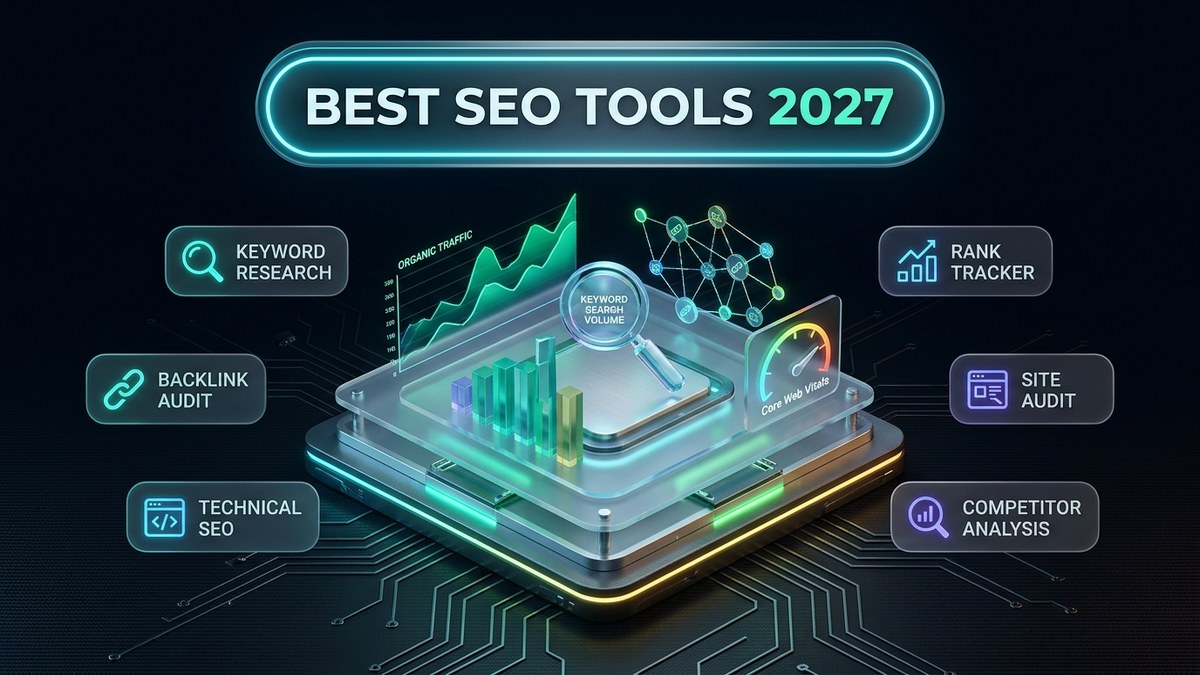
Search engine algorithms have undergone their most profound structural transformation since the inception of automated web crawling. Generative AI summaries, multi-modal search interfaces, real-time intent clustering, and conversational answers now dominate search engine results pages across commercial and informational queries alike. For digital brands, e-commerce stores, and enterprise organizations, maintaining visibility in this evolving digital ecosystem requires far more than basic metadata adjustments or casual keyword placement. Modern visibility requires professional seo tools that deliver accurate algorithmic intelligence, crawl budget diagnostics, backlink verification, and actionable search insights.
Every commercial enterprise competing online must answer a fundamental operational question: what are the best seo tools to achieve reliable search performance without wasting technical bandwidth or software budgets? While earlier search campaigns relied heavily on generic rank trackers and disconnected spreadsheets, modern growth teams require unified software stacks. Deploying the best seo tools empowers technology leaders to identify commercial keywords, audit complex JavaScript architectures, outmaneuver industry rivals, and optimize multi-channel content pipelines. Identifying the best seo tools 2027 requires examining how search platforms navigate multi-modal answers and entity relationships.
This technical benchmark analysis delivers an exhaustive breakdown of the best seo tools for website growth. Whether you are leading a regional enterprise looking for good seo tools to capture neighborhood buyers, an agency director comparing the top 10 paid seo tools for high-volume client reporting, or an early-stage founder searching for the best seo tools free of recurring subscription costs, this guide provides verified benchmarks, feature comparisons, and tactical implementation playbooks. When digital consultants evaluate which seo tools best support enterprise growth, they analyze data freshness, index size, and workflow automation.
Strategic Executive Summary
- Search engines have transitioned from exact-match keyword matching to deep entity graphs, making competitive gap analysis and semantic content clustering foundational requirements.
- All-in-one software suites provide broad multi-channel capabilities, while specialized crawlers remain indispensable for uncovering architectural rendering issues and indexation bottlenecks.
- Budget-conscious organizations can assemble high-performance workflows by pairing official search engine console utilities with open analytics platforms.
- Agency scale requires robust automated client reporting, multi-seat governance, and comprehensive Application Programming Interface (API) integrations.
- Evaluating software stacks based on data freshness, backlink database size, and workflow automation prevents recurring subscription bloat.
Market Dynamics: How Search Intelligence Has Evolved
Evaluating the top seo tools begins with recognizing how dramatically the search landscape has shifted over recent cycles. Between late 2025 and 2026, algorithmic updates accelerated the adoption of automated entity recognition and direct-answer experiences. When comparing historical suites from best seo tools 2026 against current standards, the primary difference lies in how search platforms analyze context. Modern algorithms evaluate topical authority across entire content graphs rather than scoring isolated web pages against isolated keywords. Reviewing the top 10 seo tools provides clear benchmarks for feature depth and algorithmic adaptability.
Consequently, the best seo tools online now incorporate natural language processing models, semantic gap detection, and entity relationship mapping. Growth teams can no longer afford to evaluate search performance solely through desktop keyword rankings. Mobile user journeys, local map pack visibility, video indexing, and zero-click answer boxes demand multifaceted intelligence. Software providers that fail to update their historical databases with multi-modal search telemetry have fallen behind platforms that continuously refresh their indexing infrastructure.
Furthermore, technical infrastructure demands have reached an all-time high. Modern web applications built on complex single-page architectures, dynamic hydration frameworks, and distributed content delivery networks present unique crawling challenges. Technical engineers rely on dedicated diagnostics to identify broken canonical tags, orphan URLs, slow server response times, and rendering failures before search engine bots abandon their crawl budgets. For teams seeking a condensed software stack, the top 5 seo tools deliver full coverage across auditing, keyword research, and link analysis.
Modern organic discovery also demands strict attention to user engagement signals and brand entity associations. As search systems integrate knowledge graph entities directly into conversational search interfaces, a brand's authority is calculated through co-citations, verified author credentials, authoritative external publications, and consistent schema markup. Modern platforms reflect this shift by providing entity mapping tools alongside traditional keyword difficulty scores.
| Platform Name | Primary Category | Core Specialization | Free Tier Available | Starting Price |
|---|---|---|---|---|
| Semrush | All-in-One Growth Suite | Competitive intelligence & keyword database | Limited daily queries | $139.95 / mo |
| Ahrefs | Link & Content Intelligence | Backlink profiling & site auditing | AWT for verified sites | $129.00 / mo |
| Google Search Console | First-Party Search Telemetry | Index coverage & search impressions | 100% Free Forever | $0 (Free) |
| Screaming Frog | Technical Desktop Crawler | Deep architectural audits & JS rendering | Up to 500 URLs | $259.00 / yr |
| Surfer SEO | Content Optimization | NLP content scoring & topical mapping | Free extension only | $89.00 / mo |
| Moz Pro | Foundational Suite | Domain Authority & rank monitoring | 30-Day Free Trial | $99.00 / mo |
| SE Ranking | SMB & Agency Hybrid | Accurate rank tracking & client portals | 14-Day Free Trial | $65.00 / mo |
| SpyFu | Competitor Intelligence | Historical PPC & organic keyword overlap | Free web searches | $39.00 / mo |
| Yoast SEO | CMS Plugin Architecture | Schema generation & on-page validation | Full Free Plugin | $99.00 / yr |
| vidIQ | Video Search Platform | Video tags, watch velocity & CTR metrics | Basic extension | $19.00 / mo |
1. Semrush
Semrush has solidified its status as an industry benchmark for enterprise-scale marketing intelligence. Serving digital agencies, brand strategists, and corporate marketing departments worldwide, it offers an integrated ecosystem that spans organic keyword research, pay-per-click ad tracking, backlink surveillance, and automated site health auditing. For practitioners who require multi-channel visibility across organic search and paid acquisition channels, Semrush provides reliable operational depth.
The platform centers around its extensive global keyword database, comprising tens of billions of search queries across hundreds of geographic markets. The Keyword Magic Tool allows content planners to discover question-based queries, semantic topic clusters, and intent categorizations with exceptional speed. Furthermore, its competitive analysis module enables users to input any competing domain and dissect historical traffic trends, identifying the exact landing pages driving conversions for market rivals.
Beyond keyword discovery, Semrush delivers robust technical audit capabilities. The Site Audit tool crawls corporate websites to pinpoint canonical errors, broken internal links, crawl depth bottlenecks, and Core Web Vitals performance regressions. Its automated reporting engine and Looker Studio integrations make it an indispensable choice for client-facing organizations that need to generate scheduled performance dashboards without manual data extraction.
For organizations operating paid advertising campaigns alongside organic initiatives, the platform bridges data silos effectively. Marketers can analyze competitors' Google Ads copy, display ad placements, and shopping campaigns, revealing high-converting search terms before allocating organic content production budgets. This cross-channel capability ensures growth teams focus their resources on keywords with proven commercial intent.
From a workflow management perspective, Semrush incorporates an agile Marketing Calendar, social media distribution scheduling, and brand monitoring feeds. Its Position Tracking module monitors mobile and desktop rankings daily, allowing managers to set up custom trigger alerts whenever high-priority commercial keywords drop below target ranking thresholds.
2. Ahrefs
Ahrefs represents the premier choice for backlink research, technical link profile forensics, and competitive content benchmarking. Powered by its proprietary web crawler, which continuously indices billions of web pages every day, Ahrefs offers unmatched precision for link builders, digital PR specialists, and senior technical strategists. Its intuitive user interface allows teams to evaluate link equity, anchor text distributions, and domain authority metrics across diverse industry verticals.
The core engine of Ahrefs is Site Explorer, a diagnostic interface that uncovers the organic search profile and backlink architecture of any target URL. Marketers can examine referring domain velocity, discover toxic or lost links, and identify high-performing content assets across competitor sites. Its Content Explorer tool functions as a search engine for digital marketers, highlighting high-performing articles based on social distribution, organic traffic value, and referring domain acquisition rates.
For on-site diagnostics, Ahrefs Site Audit provides cloud-based crawling with comprehensive JavaScript execution support. This capability ensures that modern single-page applications and client-side rendering frameworks are fully audited for missing title tags, structured data validation issues, and orphan URL patterns. Verified domain owners can access these diagnostic features free of charge through Ahrefs Webmaster Tools, establishing it as one of the best free seo tools available for webmasters managing their own digital properties.
Additionally, Ahrefs Keywords Explorer delivers accurate search volume modeling by blending traditional search engine data with clickstream telemetry. This methodology provides realistic estimates of actual clicks per search, helping strategists avoid optimizing for zero-click queries that do not generate direct website visits. Its intuitive keyword difficulty score helps teams identify achievable ranking targets based on actual backlink requirements.
For outreach campaigns, Ahrefs surfaces unlinked brand mentions and broken external links pointing to competing websites. By identifying dead resources on external authority portals, outreach teams can propose high-quality replacement articles, systematically acquiring authoritative referring domains that strengthen organic topical positioning.
3. Google Search Console
Google Search Console serves as the foundational, authoritative source of first-party organic search performance telemetry. Because third-party platforms estimate organic impressions and click distributions through algorithmic modeling, Google Search Console remains irreplaceable as the direct communication channel between website administrators and search engine indexing systems. Every commercial website must maintain an active, verified Search Console property.
The platform provides precise performance data, detailing the exact queries driving search impressions, average position rankings, and organic click-through rates. Its Page Indexing reports highlight why specific pages fail to enter search indices, categorizing issues by server errors, redirect loops, canonical discrepancies, and unindexed crawl statuses. Furthermore, Search Console issues direct algorithmic notifications regarding manual penalties, hacked content alerts, and security vulnerabilities.
In addition to basic ranking data, Google Search Console monitors structured data implementation, validating BreadcrumbList, Article, Product, and FAQ schema markup. Its Core Web Vitals tab visualizes real-world Chrome User Experience Report data, helping developers rectify Cumulative Layout Shift and Largest Contentful Paint regressions. Operating as an entirely free web application, it stands as the absolute foundation for top seo tools free of commercial licensing restrictions.
The URL Inspection tool within Search Console enables developers to test live rendering, submit individual URLs for priority indexing, and view the exact rendered HTML seen by Googlebot. By examining the rendered code, technical teams can verify whether client-side JavaScript components, meta tags, and internal navigation links are successfully interpreted during indexing runs.
Search Console also offers automated email notifications whenever sudden crawl anomalies occur. If an administrative misconfiguration accidentally injects a noindex header across an entire content section, or if server response times spike drastically, site managers receive immediate alerts, enabling rapid remediation before business revenue suffers.
4. Screaming Frog SEO Spider
Screaming Frog SEO Spider is the industry-standard desktop crawling utility for enterprise technical auditing, migration management, and architectural diagnostics. Unlike cloud-based platforms that restrict crawl frequency and concurrent thread execution, Screaming Frog runs locally on macOS, Windows, and Linux machines, delivering deep control over crawl parameters, custom extraction regex, and API integrations.
Technical consultants rely on Screaming Frog to simulate search bot behaviors with exact fidelity. The crawler effortlessly handles complex JavaScript rendering through an integrated Chromium engine, executing dynamic scripts to reveal how client-side frameworks render critical text, navigation links, and schema tags. It instantly flags HTTP status codes, broken 404 links, duplicate title tags, oversized image assets, and misconfigured robots directives.
Furthermore, Screaming Frog integrates seamlessly with Google Search Console, Google Analytics 4, and PageSpeed Insights APIs, pulling live traffic and performance metrics directly into crawl tables. Users can export interactive site architecture visualizations and crawl tree diagrams to pinpoint orphan URLs and deep crawl layers. With its free edition permitting crawls up to 500 URLs, it ranks among the top 5 free seo tools for boutique sites, while its reasonably priced paid tier supports unlimited crawling for enterprise networks.
During enterprise website migrations, Screaming Frog is indispensable for mapping old URLs to new destinations. Technicians can crawl pre-production staging environments, verify that all 301 redirects resolve accurately, and audit canonical tag configurations before changing DNS records, preventing catastrophic traffic losses during infrastructure upgrades.
Its custom extraction capabilities allow engineers to scrape specific data attributes from raw HTML or rendered DOMs. Whether verifying inventory status across e-commerce product pages, auditing author metadata, or checking whether specific tracking pixels fire correctly, Screaming Frog executes complex audits across tens of thousands of URLs with automated precision.
5. Surfer SEO
Surfer SEO has pioneered real-time content optimization by leveraging natural language processing and competitive document modeling. While traditional keyword finders report general search volume metrics, Surfer analyzes hundreds of real-time signals from top-ranking pages across target search queries, generating prescriptive content guidelines that help copywriters structure comprehensive, authoritative articles.
The platform evaluates keyword frequency, heading structures, paragraph counts, image density, and semantic entity distributions. By comparing draft content against live competitors, the Surfer Content Editor assigns an objective Content Score, giving writers clear feedback on missing subtopics and co-occurring terms. This methodology ensures content aligns with modern semantic indexing requirements without falling into artificial keyword stuffing.
In addition to content authoring, Surfer offers an automated Audit tool that evaluates existing published pages against fresh search competitor data. It highlights quick-win optimization opportunities, such as internal linking gaps, missing secondary terms, and structural adjustments. Its native integration with Google Docs, WordPress, and Jasper makes it widely regarded as one of the best seo tools for content writing and editorial production teams.
Surfer's Topical Map generator further assists growth leads in planning comprehensive content clusters. By analyzing parent entities and their associated child topics, it outlines a series of interlinked articles designed to establish undeniable topical authority across a chosen subject area, helping brands systematically outrank incumbent competitors.
The platform also features a SERP Analyzer that visualizes correlation metrics between search position and various page factors. Marketers can examine whether character count, heading distribution, or backlink count has the strongest correlation with top rankings for a specific target query, providing data-backed clarity for editorial resource allocation.
6. Moz Pro
Moz Pro remains one of the most recognizable and enduring brand names in search marketing history. As the pioneer of fundamental industry metrics such as Domain Authority (DA) and Page Authority (PA), Moz provides a structured, accessible platform tailored for marketing generalists, small business teams, and internal corporate departments. Its balanced feature set focuses on workflow simplicity and clear educational guidance.
The platform delivers reliable keyword research through Keyword Explorer, providing realistic difficulty scores and estimated organic click-through rates. Its Link Explorer tool tracks incoming backlinks, anchor text health, and Spam Score distributions, helping site owners evaluate the quality of external references. Weekly automated crawls alert teams to broken links, missing meta descriptions, and duplicate content issues that could compromise indexing performance.
Additionally, Moz Local offers specialized local citation management, helping multi-location businesses maintain consistent Name, Address, and Phone data across major directories and mapping platforms. For teams seeking a dependable platform that avoids overwhelming configuration menus, Moz Pro stands as a trusted option among the most popular seo tools on the market.
The MozBar browser extension provides instant on-page diagnostics as you browse the web. Marketers can quickly view page elements, highlight follow versus nofollow links, examine schema markup, and assess the Domain Authority of search engine results in real time, making competitive evaluation remarkably efficient.
Its Brand Authority metric provides deeper intelligence into how prominent an enterprise brand is across online conversations. By tracking brand search volume, co-citations, and entity recognition, Moz helps leadership teams measure brand equity improvements that correlate with organic search performance gains.
7. SE Ranking
SE Ranking has emerged as an exceptionally powerful, cost-effective hybrid platform designed specifically for growing agencies, boutique consultancies, and mid-sized commercial organizations. Offering an impressive suite of competitive intelligence, backlink monitoring, technical auditing, and rank tracking utilities, SE Ranking balances enterprise-grade accuracy with flexible, affordable subscription pricing.
A primary strength of SE Ranking is its keyword position tracking engine. The system checks search engine rankings with high precision across desktop and mobile devices, specific geographic coordinates, and localized map packs. Marketers can monitor keyword movements across Google, Bing, and YouTube with daily ranking refreshes, making it an indispensable resource for regional campaigns and local business initiatives.
For consulting firms and digital marketing agencies, SE Ranking provides comprehensive white-label reporting and customizable client portals. Agencies can host performance dashboards on custom subdomains, incorporating proprietary branding and automated email delivery schedules. This operational flexibility solidifies SE Ranking as one of the best seo tools for agencies that need to provide high-tier client deliverables without absorbing enterprise software overhead.
Its Page Changes Monitoring feature offers an additional layer of security for client campaigns. The system automatically tracks modifications made to title tags, heading structures, robots directives, and content blocks on critical landing pages, notifying managers immediately if an internal webmaster accidentally alters optimized code.
The platform also features a specialized Lead Generator widget for agency websites. When prospective clients visit an agency portal, they can enter their domain to receive a branded mini-audit, capturing high-intent inbound sales leads automatically while showcasing the agency's analytical capabilities.
8. SpyFu
SpyFu specializes in competitive intelligence, historical search advertising tracking, and cross-channel keyword intersection. While many platforms prioritize broad site health diagnostics, SpyFu focuses entirely on uncovering competitors' organic search playbooks and paid advertising strategies. For brands seeking to capitalize on market opportunities already tested by industry rivals, SpyFu provides deep forensic data.
The platform maintains extensive historical archives of organic keyword rankings and Google Ads creative copies dating back over a decade. By typing any competitor's domain into the search bar, users can immediately view every keyword the competitor has ranked for, their most lucrative ad headlines, and their monthly advertising spend estimates. Its Kombat tool visualizes keyword overlap across multiple competitors, uncovering high-intent terms your brand has overlooked.
In addition to ad intelligence, SpyFu features automated backlink outreach recommendations, ranking competitor backlinks by domain strength and relevancy. With unlimited search queries and project exports included on entry tiers, SpyFu remains one of the best seo tools for competitor analysis and digital growth strategy.
Small teams running limited paid budgets find SpyFu particularly valuable for eliminating wasted ad spend. By reviewing competitors' negative keyword lists and historically discontinued ad groups, marketers avoid testing unprofitable keywords and focus budgets on terms with proven commercial conversion histories.
Its Top Shared Keywords report displays the exact phrases where multiple industry competitors battle for supremacy. Identifying these core commercial terms allows new entrants to structure focused pillar pages that capture market share from complacent incumbents.
9. Yoast SEO
Yoast SEO is the most widely adopted content management plugin in web history, powering technical configuration and on-page optimization for millions of WordPress websites worldwide. By integrating directly into the WordPress Gutenberg editor and classic publishing interfaces, Yoast ensures content creators, bloggers, and site managers maintain fundamental search standards on every published article.
The plugin handles crucial technical automation behind the scenes. It automatically generates XML sitemaps, manages canonical link headers to prevent duplicate content indexing, and coordinates Open Graph and Twitter Card metadata for seamless social sharing. Its integrated schema graph generator outputs structured JSON-LD data, communicating website identity, author credentials, and organizational attributes to search engines with flawless semantic precision.
During the editorial drafting process, Yoast provides real-time feedback through its recognized traffic-light indicators. It evaluates keyword density, heading distribution, sentence length readability, and transition word usage. Its deep CMS integration establishes it as one of the best seo tools for wordpress web developers and digital publishers seeking reliable, out-of-the-box search optimization.
The premium edition introduces advanced redirect management, automatically creating 301 redirects whenever an author modifies a post slug or deletes an outdated page. This automated safeguard prevents 404 errors and preserves link equity across high-volume publishing operations.
Yoast also supports advanced cornerstone content classification. By marking fundamental pillar articles as cornerstone pieces, the plugin prompts writers to create internal links pointing from supporting blog posts toward high-priority landing pages, establishing a logical topical architecture that search bots navigate effortlessly.
10. vidIQ
vidIQ is the premier search optimization and audience development platform engineered specifically for video content creators and corporate YouTube channels. Video has become an integral pillar of multi-modal search, with Google displaying direct video timestamps and rich video snippets across organic search queries. Capitalizing on video demand requires specialized search diagnostics that analyze video tags, search velocity, and audience retention rates.
Operating as a browser extension and web suite, vidIQ surfaces competitive metrics directly on YouTube watch pages. Marketers can inspect the exact tag configurations, historical view velocity, and engagement ratios of competing videos. Its keyword research tool uncovers high-volume search queries within the YouTube ecosystem, displaying dedicated search volume and competition difficulty ratings.
Furthermore, vidIQ incorporates automated thumbnail generators, daily content trend ideas, and automated channel audit diagnostics that highlight optimal publishing times. For brands building video content to complement written articles, vidIQ stands as one of the best seo tools for youtube optimization and digital audience expansion.
Its Competitors Tool allows channels to track rival creators in real time, alerting producers when a competing video experiences sudden viewership surges. This intelligence enables content teams to produce timely follow-up videos that capitalize on breaking audience trends while viewer demand is at its peak.
Its AI Video Description generator helps creators draft comprehensive, keyword-rich video descriptions that include automated chapter markers and timestamps. Providing structured timestamps makes video content eligible for Google's Key Moments search results, dramatically increasing organic click-through rates from standard web searches.
11. Google Keyword Planner
Google Keyword Planner remains an essential first-party keyword research utility hosted within the Google Ads infrastructure. While designed primarily to assist advertisers in building paid search campaigns, it provides unmatched historical search volume ranges, bid valuation metrics, and geographic targeting filters derived directly from Google search logs.
Marketers utilize Keyword Planner to assess commercial intent. By examining top-of-page bid estimates alongside search volumes, planners can determine the commercial value of specific search phrases. High commercial cost-per-click values frequently correlate with lucrative organic conversion potential, allowing content strategists to prioritize topics that drive bottom-line business value rather than vanity traffic.
The platform also groups related search phrases into automated ad groups and thematic clusters, assisting writers in identifying natural synonyms and long-tail variants. As an accessible tool available to any registered Google advertising account, it continues to serve as an authoritative resource among top 10 free seo tools for strategic keyword valuation.
Furthermore, Keyword Planner allows users to segment keyword demand by specific cities, regions, and countries. This geographic granularity is invaluable for regional marketing campaigns, allowing strategists to identify localized search terminology and regional demand variances before launching targeted landing pages.
Historic seasonal trend graphs reveal when search demand peaks throughout the calendar year. Content planners leverage these seasonal curves to publish optimized landing pages two to three months prior to expected consumer demand spikes, ensuring pages achieve stable indexing and ranking before peak shopping periods arrive.
12. Ubersuggest
Ubersuggest delivers an approachable, affordable all-in-one search suite tailored for solo entrepreneurs, startup founders, and non-technical business managers. Developed to simplify complex technical data, Ubersuggest streamlines keyword research, domain comparisons, and on-page health monitoring into an intuitive, visually clear interface.
The platform generates comprehensive keyword lists with search volume trends, seasonal demand fluctuations, and estimated cost-per-click values. Its Site Audit tool scans websites for fundamental technical errors, delivering step-by-step instructions on how to rectify broken pages, slow loading speeds, and missing metadata. Its unique lifetime pricing options provide an attractive alternative to recurring monthly subscriptions.
Because it offers clean data visualization without requiring deep technical knowledge, Ubersuggest is widely regarded as one of the best seo tools for beginners who want to build early search traction without facing steep learning curves.
The platform also provides automated content idea generation by analyzing top-performing social articles and high-traffic competitor pages. This feature assists solo founders in identifying popular headlines and proven content formats that resonate with audiences across target niches.
Its Backlink Opportunity report identifies which websites link to multiple industry competitors but not yet to your own domain. This list provides an immediate, actionable prospecting roadmap for founders seeking to establish their first authoritative industry backlinks.
Specialized Solutions: Small Business and Local Visibility
Small enterprise owners face unique search marketing challenges. With limited technical resources and focused geographic operating areas, small companies cannot afford expensive enterprise software packages that require dedicated data analysts. Deploying the best seo tools for small business requires choosing lightweight platforms that deliver immediate, practical value.
When selecting the best seo tools for small businesses, local map pack positioning and customer review consistency take priority over massive global backlink databases. Regional contractors, legal practices, medical clinics, and retail storefronts rely on the best seo tools for local business, such as Google Business Profile Manager, Moz Local, and BrightLocal, to monitor local search visibility, track geographic keyword rankings, and automate citation verification across directories.
Furthermore, cloud-hosted platforms that combine rank monitoring with basic on-site auditing allow small business operators to identify and resolve critical errors quickly. By focusing on high-intent local phrases and maintaining consistent business directory listings, neighborhood enterprises can reliably outrank larger corporate competitors in localized organic results.
Local citation consistency serves as a cornerstone of neighborhood search dominance. When third-party directories display conflicting suite numbers, telephone area codes, or outdated operating hours, search engine algorithms lose confidence in a business geographic relevance. Automated citation distribution platforms eliminate this vulnerability by synchronizing business credentials across navigation databases, mapping applications, and regional business directories simultaneously.
Review acquisition workflows represent another key local differentiator. Tools that automate post-service SMS and email review invitations help businesses build consistent review velocity on Google Maps, signaling active, trustworthy commercial operations to local search ranking algorithms.
E-Commerce Platforms: Shopify and Online Retail Optimization
Online retail operations introduce complex technical hurdles, including faceted navigation menus, dynamic product variant URLs, out-of-stock redirects, and multi-currency indexing. Selecting the best seo tools for ecommerce platforms requires software that understands product catalog structures and transactional user intent.
Merchants operating stores on modern hosted architectures demand specialized integrations. Finding the best seo tools for shopify involves pairing platform apps like Plug in SEO or Booster SEO with enterprise crawlers that monitor canonical tags across product collections. Because search engines frequently encounter duplicate content issues when crawling filtered catalog pages, automated canonical management is essential for protecting crawl budget efficiency.
Additionally, e-commerce marketers rely on keyword intelligence to identify high-converting commercial phrases. Tracking buyer intent keywords and optimizing category taxonomy structures ensures products appear prominently when shoppers perform commercial product comparisons.
Structured data validation is equally critical for retail success. Products configured with rich schema markup display real-time pricing, stock availability, star ratings, and shipping timelines directly in search engine snippets. Modern e-commerce tools continuously test product schema graphs against search engine standards, preventing rendering errors that could strip rich snippets from commercial search results.
Managing out-of-stock inventory requires strategic redirection protocols. E-commerce platforms that automate 301 redirects to parent category pages or related active product models ensure incoming backlink equity is never wasted on dead 404 product endpoints.
Agency Scalability: Client Governance and Multi-Seat Reporting
Marketing agencies and enterprise consultancies manage complex client rosters with diverse technical stacks and reporting requirements. Choosing the best seo tools for agencies demands platforms that support multi-user role permissions, automated white-label client reporting, and programmatic API access.
Enterprise growth teams rely on the best seo tools for digital marketing to consolidate cross-channel performance metrics into unified executive summaries. By integrating organic search rankings, backlink acquisition velocity, Google Analytics conversion funnels, and paid advertising data into Looker Studio dashboards, agencies provide transparent proof of return on investment to corporate stakeholders.
Moreover, agencies must monitor thousands of client keywords across varied global geographic markets. Utilizing robust tracking platforms prevents ranking inaccuracies and allows account managers to catch sudden algorithmic volatility before it impacts client revenue.
Role-based access permissions prevent accidental data exposure across enterprise teams. Agency administrators can assign junior copywriters access strictly to keyword research and content editors, while senior technical consultants retain full administrative control over domain crawling and backlink disavow tools. This granular governance protects client assets and preserves operational security.
Custom API integrations allow progressive agencies to feed proprietary rank and audit telemetry directly into internal Business Intelligence platforms. Combining search data with internal CRM and revenue pipelines demonstrates exact pipeline value generated per organic ranking improvement.
Technical Auditing: Overcoming JavaScript Hydration and Crawl Bottlenecks
As modern web applications migrate toward single-page JavaScript architectures built on React, Next.js, Nuxt, and Vue frameworks, technical search auditing has evolved from basic HTML inspection into complex rendering diagnostics. Search engine bots execute JavaScript in a two-wave indexing process: bots first index the server-rendered HTML, and subsequently queue JavaScript execution until computing resources become available. If critical links, canonical tags, or content blocks require client-side execution, a web application may suffer significant indexing delays.
Enterprise technical teams utilize specialized crawlers to compare the raw server response against the fully rendered Document Object Model (DOM). By analyzing differences between the initial HTML payload and the rendered interface, engineers verify whether essential elements are accessible without excessive client-side scripting overhead. Identifying blocked script files, excessive document object counts, and slow API endpoints allows developers to streamline server-side rendering pipelines before search rankings drop.
Crawl budget optimization represents another vital pillar of technical management. On enterprise websites with tens of thousands of dynamic URLs, search engine bots allocate limited time and requests per crawl cycle. If bots spend their crawl allowances on unindexed filter facets, infinite redirect chains, or thin duplicate pages, high-value commercial landing pages may go uncrawled for weeks. Regular log file analysis reveals exactly where bot crawlers spend their resources, empowering engineers to construct efficient robots.txt directives and internal linking hierarchies.
Core Web Vitals performance optimization directly impacts both search ranking algorithms and user conversion rates. Diagnostic platforms isolate whether poor Largest Contentful Paint scores stem from slow server response times, render-blocking stylesheets, or unoptimized image formats, providing clear remediation roadmaps for technical development teams.
The Free Stack: Building High-Performance Zero-Cost Workflows
A widespread misconception in search marketing is that achieving first-page rankings requires spending thousands of dollars monthly on commercial software licenses. In reality, a disciplined practitioner can assemble a formidable tech stack utilizing top seo tools free of recurring licensing fees.
The foundation of any zero-cost architecture combines Google Search Console for authoritative first-party search telemetry, Google Keyword Planner for commercial intent valuation, and Screaming Frog (free tier) for on-page technical auditing. Complementing these tools with Google Trends for seasonal demand tracking and Ahrefs Webmaster Tools for backlink forensics creates an effective workflow that rivals many paid platforms.
When selecting the best seo tools online, prioritizing platforms that provide unhindered access to official search engine data ensures strategic decisions reflect verified user interactions rather than estimated third-party approximations. For bootstrapped startups and independent content creators, mastering these free resources establishes the technical foundation necessary to scale organic traffic sustainably.
Additionally, open-source browser extensions such as Detailed SEO Extension and SEO Minion provide instantaneous on-page auditing directly within your browser window. These utilities allow webmasters to inspect heading hierarchies, open graph tags, canonical declarations, and hreflang localization codes in seconds, eliminating the need to execute manual source code inspections.
Pairing these free utilities with Google Looker Studio allows marketers to build automated executive dashboards at zero cost. By connecting Search Console and Analytics feeds into clean visual charts, bootstrapped businesses maintain enterprise-level reporting clarity without monthly overhead.
Strategic Decision Matrix: Choosing the Right Software Stack
Selecting the optimal software configuration requires evaluating your organizational size, technical expertise, and business objectives. To make an informed decision, assess software options against five core criteria:
- Data Freshness and Accuracy: Verify that keyword search volumes, backlink databases, and rank tracking engines refresh continuously rather than relying on stale monthly estimates.
- Technical Auditing Depth: Ensure the platform supports JavaScript rendering and dynamic crawling if your web application utilizes modern frontend frameworks.
- Workflow Integration: Select tools that integrate natively with your CMS, Google Looker Studio, Slack, and project management pipelines to eliminate manual administrative friction.
- Seat Licensing and Scalability: Review per-user seat fees and API query allowances to avoid steep unexpected costs as your growth team expands.
- Learning Curve and Support: Balance comprehensive feature sets against the time required for team onboarding, choosing interfaces that align with your staff technical literacy.
Organizations that align their software stack with specific business goals achieve superior search visibility while maintaining disciplined, predictable marketing budgets.
Frequently Asked Questions (FAQs)
What are the best free tools to start optimizing a new website?
The most effective free stack starts with Google Search Console for index monitoring and performance tracking, Google Analytics 4 for user behavior analysis, and Google Keyword Planner for keyword research. You can pair these with the free version of Screaming Frog for technical site audits up to 500 URLs and Ahrefs Webmaster Tools for monitoring your backlink profile.
How many paid software subscriptions does a small business actually need?
Most small businesses only need one comprehensive all-in-one platform such as Semrush or SE Ranking alongside their free Google Search Console account. Subscribing to multiple overlapping enterprise tools creates redundant software expenses without delivering additional strategic value.
What is the primary difference between all-in-one suites and specialized crawlers?
All-in-one suites excel at competitive research, keyword tracking, and backlink monitoring across the broader internet, but their automated cloud site audits are often limited in crawl depth. Specialized desktop crawlers such as Screaming Frog focus entirely on deep technical site architecture, JavaScript execution, and server-level response analysis.
Can a website rank well on search engines using only free software?
Yes, many successful websites achieve dominant organic positions using exclusively free software. Because Google Search Console provides exact first-party search telemetry, webmasters can identify high-intent keywords, fix technical errors, and optimize content without paying for third-party commercial databases.
How have search engine algorithms changed the requirements for content optimization?
Modern search engines evaluate topic completeness, semantic entity relationships, and user satisfaction rather than repetitive keyword density. As a result, content creators now utilize natural language processing tools to ensure their articles thoroughly address user intent, subtopics, and contextual questions.
Elevate Your Search Performance with BlackTech
Navigating search engine algorithms, technical website migrations, and enterprise content strategy requires deep hands-on expertise. While having the right software tools is essential, translating raw data into sustainable commercial revenue requires strategic execution. BlackTech Consultancy delivers full-funnel digital marketing, custom software engineering, and enterprise search solutions tailored to help modern businesses dominate their markets. Contact our technical team today to schedule an in-depth website audit and build a customized growth blueprint for your organization.